How to Trade Meme Coins in 2026 Without Losing Your Deposit
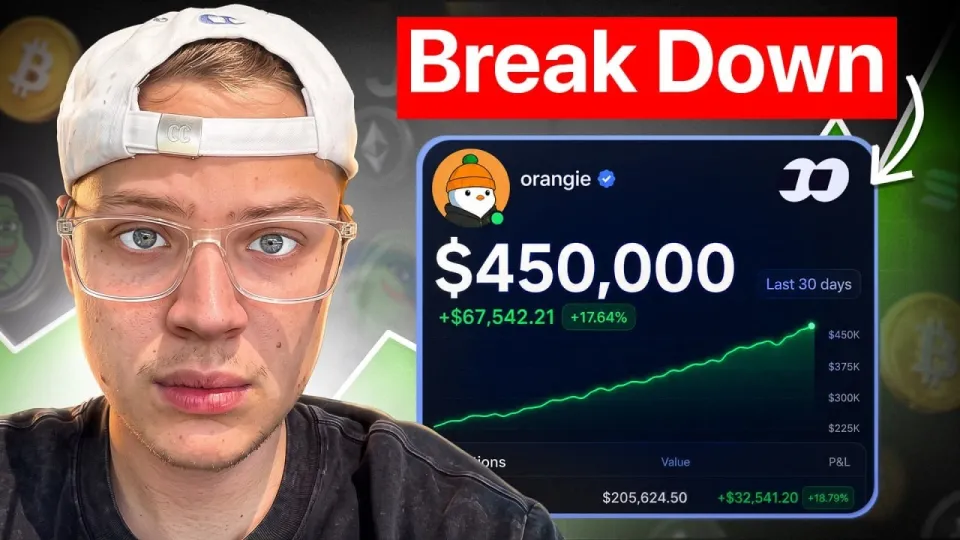
Video: How I Made $450,000 Trading Memecoins in 30 Days
You can order the same kind of articles for your own video to boost it on YouTube and Google. Just message the Telegram bot @sat_sit_bot. The bot writes and publishes the articles itself (with your YouTube video embedded) on popular topical websites (no ads). Try it free: 50 articles on us.
· based on the channel Orangie Web3
Key takeaways
- Meme coins are high-volatility tokens with no cash flow; price is driven by narrative, liquidity and attention.
- A $450,000 result in 30 days is possible on Solana meme coins, but the same mechanics wipe out most small accounts.
- One winner rarely covers a string of losses: position sizing matters more than the entry itself.
- Sniper groups and private calls give insiders an edge; retail traders usually buy their exit liquidity.
- Tools like FOMO and community chats speed up execution but do not remove rug and liquidity risk.
Meme coins are cryptocurrencies with no product, cash flow or roadmap behind them: their price rests entirely on narrative, liquidity and attention. Trading them is a bet on who else will buy after you, which is why a $450,000 run in 30 days and a 90% loss are two outcomes of the same mechanism. The author of the breakdown, the Orangie Web3 channel, shows his own trades and points viewers to a paid community through the Kaizen Group checkout, where the workflow behind such results is taught.
What meme coins actually are and why they move so fast
A meme coin is a token whose value comes from a joke, a character or a moment of internet attention rather than from revenue. Dogecoin started the category, and the current cycle runs mostly on Solana, where launching a token takes minutes and costs a few dollars. Because supply is created instantly and liquidity is thin at the start, a small inflow of buyers can multiply the price, and a small outflow can erase it. This is why the same coin can print a 10x and a -95% within a day, and why timing and exit discipline matter more than the story itself.
How a $450,000 month is actually built
The headline result comes from a small number of outsized winners, not from consistent daily gains. In practice a meme coin trader runs dozens of small positions, most of which go to zero or are closed at a small loss, and a handful that return 5x, 20x or more. The math only works if the winners are large relative to the account and the losers are capped. A trader who risks 2–5% of the bankroll per idea can survive ten dead coins; one who goes all-in on a single call usually cannot. The $450,000 figure also reflects compounding during a hot market window, when new liquidity enters every day and narratives rotate fast.
The real edge: speed, information and exit liquidity
Being early is the only durable advantage in this market, and early usually means inside a group that shares calls before the public sees them. A common criticism of such videos is fair: top traders sit in private chats where coins are flagged and sniped together, so retail buyers often provide the exit liquidity for insiders. That does not make every call a scam, but it changes the question from "which coin is good" to "who is selling to me and at what price". Practical consequences: check who holds the supply, how much of it sits in a few wallets, whether liquidity is locked, and how old the contract is. If a coin is already up 300% when you see it in a public feed, you are late by definition.
A working routine for small accounts
A repeatable process beats a lucky pick, especially when starting with a small deposit. A practical routine looks like this:
- Fix a risk unit before trading — for example 2% of the account per position — and never increase it after a loss.
- Track a short watchlist of narratives rather than random tickers: new launches, revived characters, exchange listings.
- Check the contract and holders before entry: mint authority, freeze authority, top-10 wallet concentration, liquidity pool size.
- Define the exit before buying: a target multiple to sell part of the position and a hard stop where the thesis is dead.
- Take profits in tranches — selling half at 2x–3x removes the psychological pressure that turns a winner into a loss.
- Log every trade with entry, exit and reason, so patterns become visible after 30–50 trades.
Platforms such as FOMO compress the execution side into a few clicks, which helps when a launch moves in seconds, but they do not replace the checks above.
Common questions and doubts from viewers
The most frequent concerns are about pace, losses and whether the results are repeatable. Many viewers say they lost most of a first small deposit and only recovered after one strong hit — that is the normal shape of the learning curve, not a malfunction. Others ask for slower explanations and more detail on entries and exits, which is exactly the skill that separates a lucky trade from a process. A few point out, correctly, that a video cannot show the private coordination behind fast calls. The honest answer: treat every showcased result as marketing for the method, not as a forecast of your own returns, and size positions so that being wrong ten times in a row is survivable.
Useful links
- Kaizen Group access and checkout: https://whop.com/checkout/plan_GTFkEFh0JFpU8?a=orangie
- FOMO trading platform: https://fomo.family/r/orangie
- Discord community: https://discord.gg/memecoins
- Instagram: https://www.instagram.com/orangieyt/
Final thoughts on meme coin trading
The $450,000 in 30 days story is real as a documented run, but it is a tail outcome produced by a hot market, early information and strict position sizing — not a baseline expectation. Meme coins remain the highest-risk corner of crypto: most tokens go to zero, insiders often sell into retail demand, and a single undisciplined position can erase months of work. The useful takeaway is the routine, not the number: small risk units, contract checks, planned exits and a trade log. The Orangie Web3 channel is the author of this breakdown, and its Kaizen Group checkout is where the full workflow is taught.
Source: How I Made $450,000 Trading Memecoins in 30 Days · Markdown version
Questions & answers
Can you really make $450,000 trading meme coins in 30 days?
It is possible during a strong market with early entries and large position sizes, but it is a rare outcome rather than a typical one. The figure comes from a handful of outsized winners that offset many small losses. Treat it as a case study of a method, not as an expected return.
How much money do you need to start trading meme coins?
You can start with a small amount, often $50–$200, because Solana fees and token prices are low. What matters more is that the amount is money you can afford to lose entirely, since most positions will not work out. Risking 2–5% of the account per trade keeps a losing streak survivable.
Why do most retail traders lose money on meme coins?
They usually buy after the move is already public, when insiders and early wallets are selling. Thin liquidity means the price collapses faster than it rose, and without a pre-set exit the loss becomes total. Private groups with fast calls structurally have an advantage over solo buyers.
What should you check before buying a new meme coin?
Verify the contract for mint and freeze authority, look at how much supply the top wallets hold, and check the size and lock status of the liquidity pool. Confirm the token is not a copy of an older contract and that trading volume is real rather than wash trading. If any of these checks fails, skip the trade.